

Time, Timing, and Movement in Tarot
How to read “when” in a spread: pace and movement, a calendar window, and a prerequisite. The Aces and the quarters of the year, the Knights and Queens, timing windows for the court cards, the Major Arcana as zodiac windows, and cards that signal acceleration or ask you to wait.

You ask about a new job, a conversation you’ve been waiting for, or a move, and draw a card. The first question is often what it says about the situation; the second is when something will finally happen. Tarot offers several ways to answer that second question, but it helps to distinguish movement from a date. The Knight of Swords and the Knight of Pentacles may point toward the same destination while describing two very different paths to get there.
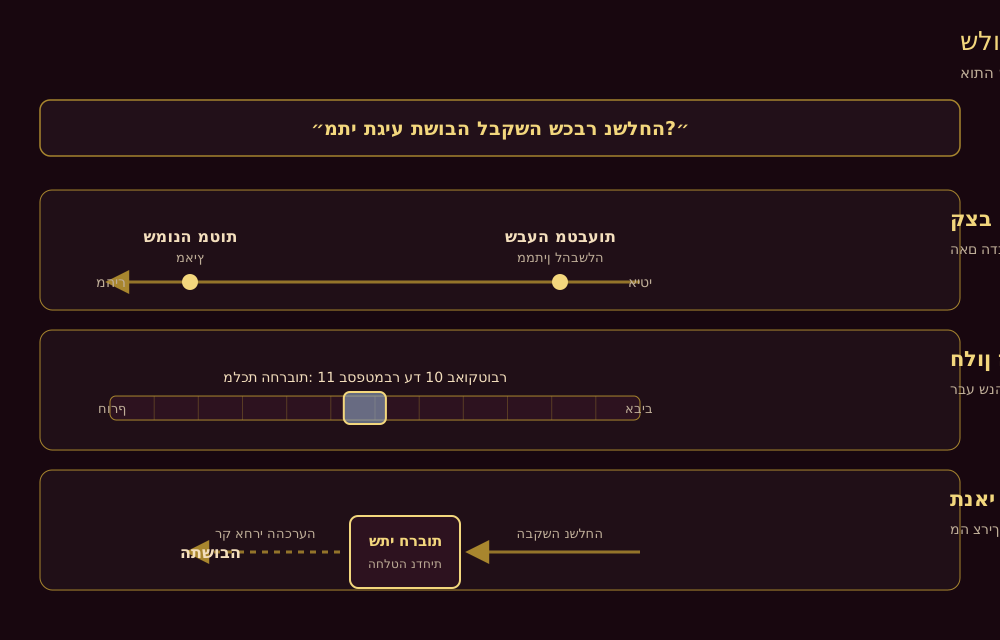
You can read the pace of events in an ordinary spread, too: whether things are gaining momentum, coming to a halt, or ripening. To read a calendar window, it helps to ask about a specific event. “When will things change?” leaves too much room; “When will I receive a response to the application I’ve already submitted?” gives the card something concrete to work with. In this article, the calendar correspondences draw on the Golden Dawn’s astrological attributions: Aces point to quarters of the year, certain court cards to shorter periods, and cards from the Major Arcana to zodiac seasons.
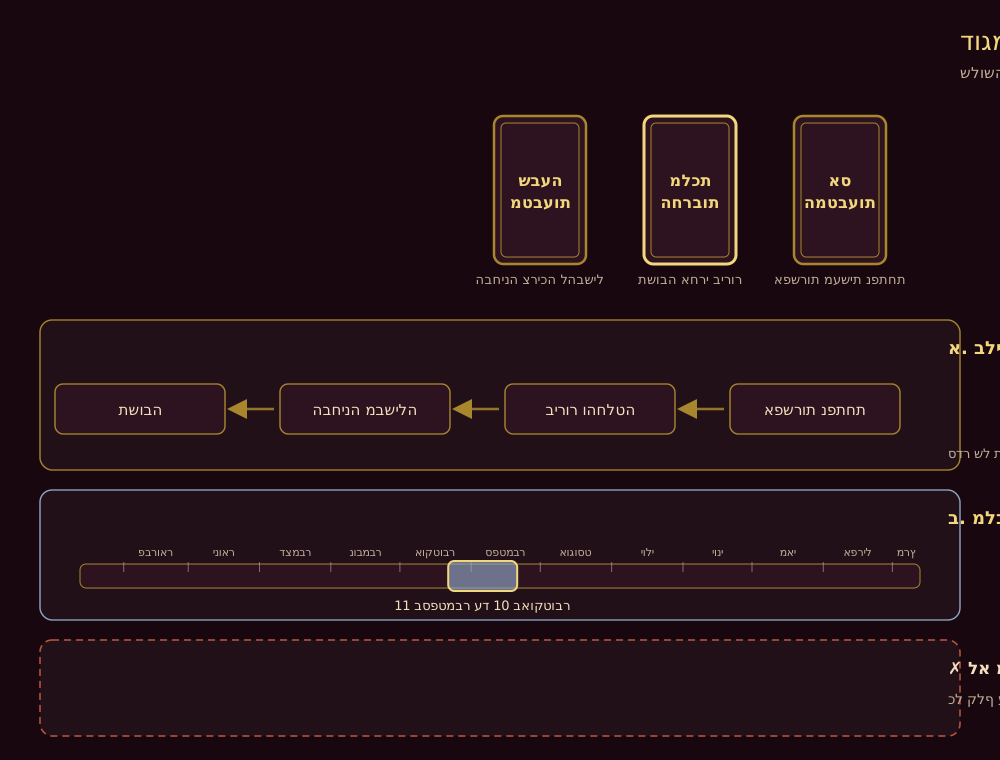
Three Layers of Reading Time
Pace and movement. Consider: Is something getting started, waiting, progressing steadily, or taking a sharp turn? The Eight of Wands, for example, accelerates things; the Seven of Pentacles waits for them to ripen.
Time window. Consider: A zodiac season, a quarter of the year, or a court card’s astrological window. The Ace of Pentacles, for example, is associated with the quarter covering Aries, Taurus, and Gemini; the Queen of Swords with a window spanning late Virgo and early Libra.
Prerequisite. Consider: What needs to happen before the event you’re asking about can take place? The Two of Swords, for example, may point to a decision that has yet to be made.
This distinction helps avoid forced interpretations. The Four of Swords can describe a pause even when no timing position has been assigned in the spread. It does not mean “four weeks” here; the number four describes, first and foremost, the nature of the current stage.
How the Suits Move
Fire and air generally bring faster movement; water moves at the pace of connection and feeling; earth needs time to build something tangible. There is a distinction here, too: Swords can bring a pointed message, but clarity of thought does not guarantee that someone has already acted.
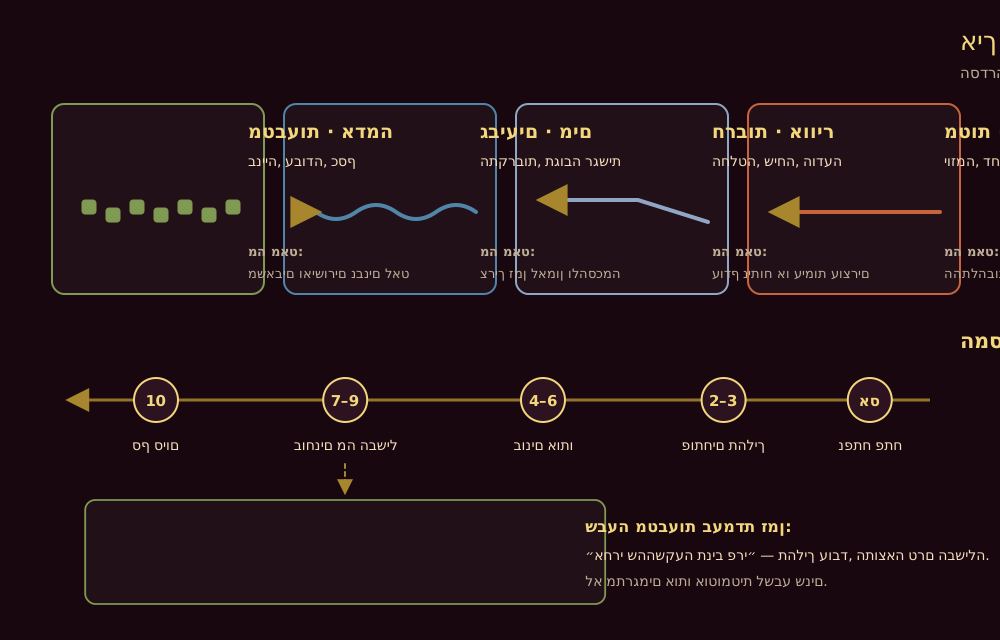
Wands — Fire. Nature of the movement: initiative, drive, getting started. What can slow it down: enthusiasm flares quickly and may fade.
Swords — Air. Nature of the movement: a decision, conversation, message, or change of direction. What can slow it down: overanalysis or conflict can stall action.
Cups — Water. Nature of the movement: growing closer, responding emotionally, opening up gradually. What can slow it down: trust and agreement take time.
Pentacles — Earth. Nature of the movement: building, work, money, and practical arrangements. What can slow it down: resources, approvals, and habits take time to develop or secure.
The suit describes the kind of movement, while the number helps identify the stage: Two and Three open a process, Four through Six build it, Seven through Nine examine what has ripened, and Ten brings it to the threshold of completion. In a timing position, the Seven of Pentacles may say, “After the investment bears fruit.” In this article, it is not automatically translated into seven years.
The Aces: When an Opening Appears
An Ace marks potential entering the picture. It can signal the beginning of a period or the moment an opportunity emerges, but not necessarily the completed outcome. If the Ace of Wands appears in response to a question about a project, the initiative may be taking shape now, with the actual work still ahead.
Ace of Wands. What may begin now: an idea, desire, initiative, or first approach. What needs to happen next: act before the initial drive fades.
Ace of Swords. What may begin now: an insight, decision, message, or conversation. What needs to happen next: translate clarity into action.
Ace of Cups. What may begin now: a new connection, a feeling, growing closeness. What needs to happen next: make room for a mutual response.
Ace of Pentacles. What may begin now: an offer, a resource, a tangible opportunity. What needs to happen next: build something stable from it.
The Four Aces and the Quarters of the Year
In the Golden Dawn system, each Ace is the root of an element and is assigned to one of the four quarters of the year. These are windows of roughly three months in the Northern Hemisphere, defined by three consecutive zodiac signs. The astrological attribution does not necessarily match our intuitive image of the element: the Ace of Pentacles, for example, belongs to spring.
Ace of Pentacles — Spring. Aries, Taurus, Gemini; approximately March 20 through June 20.
Ace of Wands — Summer. Cancer, Leo, Virgo; approximately June 21 through September 22.
Ace of Cups — Fall. Libra, Scorpio, Sagittarius; approximately September 23 through December 21.
Ace of Swords — Winter. Capricorn, Aquarius, Pisces; approximately December 22 through March 19.
If the question is “When will a new work opportunity open up?” and the Ace of Pentacles appears in a timing position, the reading may point to the quarter between late March and late June. The Ace speaks of the opportunity emerging—an offer, an approach, or an initial resource—not necessarily the completion of the process. When the Ace of Wands appears in a position describing the present, it may point to an initiative that has already sparked; it is not automatically shifted to next summer.
In the original Golden Dawn attributions, the Aces and Pages are also described as having domains in space; reading such a domain as a quarter of the year is one way to use the astrological map for timing. It provides a broad season, so the surrounding cards matter when interpreting what happens within it.
The Knights: Who Makes a Move, and When
A Knight is a card of movement, but not all movement is alike. In a reading about another person, the card describes the nature of their possible action more than it commits to a date when that action will arrive.
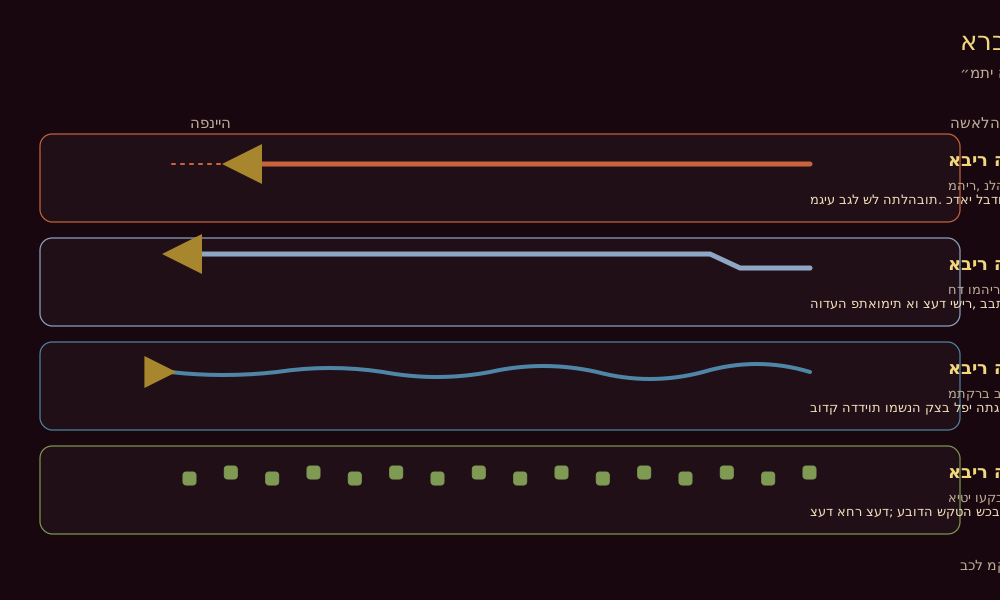
Knight of Wands — Fast and enthusiastic. Arrives, initiates, offers, and tries. It is worth checking whether they also stay.
Knight of Swords — Direct and fast. A sudden message, a straightforward conversation, or a move made all at once.
Knight of Cups — Approaches gradually. Looks for reciprocity, reaches out gently, and adjusts the pace according to the response.
Knight of Pentacles — Slow and consistent. Plans, sorts out details, and continues step by step; progress shows itself in small actions.
If the question is “When will they get in touch?” the Knight of Swords may suggest a quick, direct approach; the Knight of Wands, a swift initiative carried by a wave of enthusiasm. The Knight of Pentacles asks us to distinguish between a complete standstill and quiet work already underway. In any case, an additional card can show what is delaying contact or what needs to happen first.
The Queens: What Prompts Them to Move?
The Queens sit on their thrones, but sitting does not mean doing nothing. Sometimes they mark the moment when there is enough clarity, maturity, or confidence to respond. The question is what each needs to know before she rises.
Queen of Wands. Tends to act when she sees room for initiative and expression. The first sign of movement: initiates a meeting, presents an idea, draws others into action.
Queen of Swords. Tends to act when the information is clear enough and the boundaries are known. The first sign of movement: a crisp answer, an explicit decision, or a conversation that clears up ambiguity.
Queen of Cups. Tends to act when there is emotional safety and the capacity to listen. The first sign of movement: an open conversation, an expression of feeling, or a gesture of closeness.
Queen of Pentacles. Tends to act when practical conditions make sustained effort possible. The first sign of movement: sets aside time or money, prepares a space, establishes a routine.
The Queen of Swords may decide as soon as she receives a missing detail. The Queen of Pentacles may already know what she wants but wait until the resources and daily schedule can support the decision. This distinction is especially useful when asking, “When will they make a move?” One calls for clarity; the other calls for groundwork.
The Court Cards’ Time Windows
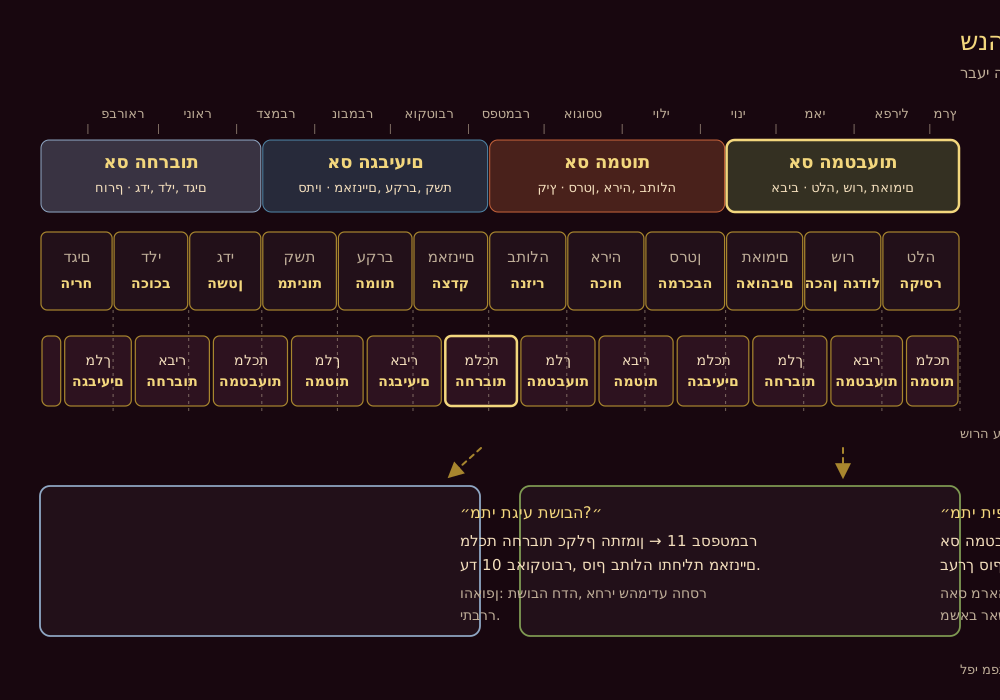
In the Golden Dawn system, the Pages accompany the Aces in the broad quarters of the year. Kings, Queens, and Knights have shorter windows of about thirty degrees of the zodiac—roughly a month. Each window crosses the boundary between two signs. The list follows the progression of the year and uses the card names customary in the Rider–Waite–Smith deck; the dates are approximate and vary slightly from year to year.
Queen of Wands. Late Pisces and early Aries · March 11 through April 10.
Knight of Pentacles. Late Aries and early Taurus · April 11 through May 10.
King of Swords. Late Taurus and early Gemini · May 11 through June 10.
Queen of Cups. Late Gemini and early Cancer · June 11 through July 10.
Knight of Wands. Late Cancer and early Leo · July 11 through August 10.
King of Pentacles. Late Leo and early Virgo · August 11 through September 10.
Queen of Swords. Late Virgo and early Libra · September 11 through October 10.
Knight of Cups. Late Libra and early Scorpio · October 11 through November 10.
King of Wands. Late Scorpio and early Sagittarius · November 11 through December 10.
Queen of Pentacles. Late Sagittarius and early Capricorn · December 11 through January 10.
Knight of Swords. Late Capricorn and early Aquarius · January 11 through February 10.
King of Cups. Late Aquarius and early Pisces · February 11 through March 10.
The Queen of Swords can therefore describe a response that comes after clarification and, in a “when” question, point to the period from around mid-September to early October. The Queen of Pentacles describes a need for practical preparation and, in a calendar-based reading, points to mid-December through early January. These are two different layers of the same card: how she acts and when her astrological window falls.
Pay attention to the names of court ranks across decks: the Golden Dawn King corresponds to the Rider–Waite–Smith King, but in the Thoth deck this rank is called Knight. The Knight in the Golden Dawn and Rider–Waite–Smith systems is called Prince in Thoth. If you work with another deck, check the corresponding court rank before carrying over a date.
Cards That Accelerate Things and Cards That Ask You to Wait
Rather than attaching a number of days to every card, you can ask what is happening along the way. The following list sheds light on the reason for a delay—and therefore on what might change.
Eight of Wands. What is happening with time: things already set in motion arrive quickly. What allows movement: being ready to respond when they arrive.
The Chariot. What is happening with time: there is direction and the strength to move. What allows movement: choosing a destination and focusing your energies.
The Hanged Man. What is happening with time: a pause or a shift in perspective. What allows movement: seeing the situation differently before pushing again.
Four of Swords. What is happening with time: a break and recovery. What allows movement: completing the period of rest or processing.
Seven of Pentacles. What is happening with time: a process is working, but the result has not yet ripened. What allows movement: checking what is growing and continuing to tend it.
Two of Swords. What is happening with time: a decision is being postponed. What allows movement: making a choice or obtaining the missing information.
Four of Cups. What is happening with time: an opportunity exists, but no one is responding to it. What allows movement: noticing what is already being offered.
For readers who use reversals, a reversed card can signal a delay, but there is no universal rule that every reversed card adds time. Sometimes a reversal actually shows a blockage being released. Read the imagery and the rest of the spread.
The Major Arcana as Zodiac Windows
In the Golden Dawn system, twelve Major Arcana cards are assigned to zodiac signs. In a timing position, one of these cards can point to that sign’s season, roughly one month of the year. It also continues to tell its usual story: Justice, for example, can point both to Libra season and to a decision or formal arrangement that needs to take place.
The Emperor — Aries. March 20 through April 19.
The Hierophant — Taurus. April 20 through May 20.
The Lovers — Gemini. May 21 through June 20.
The Chariot — Cancer. June 21 through July 22.
Strength — Leo. July 23 through August 22.
The Hermit — Virgo. August 23 through September 22.
Justice — Libra. September 23 through October 22.
Death — Scorpio. October 23 through November 21.
Temperance — Sagittarius. November 22 through December 21.
The Devil — Capricorn. December 22 through January 19.
The Star — Aquarius. January 20 through February 18.
The Moon — Pisces. February 19 through March 20.
The dates vary slightly from year to year. Other Major Arcana cards, such as The Magician or The World, are associated with planets rather than a single zodiac sign. They can tell us about the nature of the pace—speed, maturation, a turning point—but we cannot assign them a particular month without defining an additional method for doing so.
This list does not turn every card into a date. The Knight of Swords may indicate a swift development even though its astrological window falls in winter, and the Ace of Pentacles may indicate an opportunity already offered even if spring has not yet arrived. First, establish whether the card describes what is happening, how it is moving, or when it might happen.
How to Use This in a Spread
A single card for a “when” question. What to read: an Ace gives a quarter of the year, a King/Queen/Knight gives a court-card window, and a Major Arcana card assigned to a zodiac sign gives that sign’s season; also consider pace and prerequisites. A useful follow-up question: “Does the card indicate a beginning or a completed outcome?”
Past–Present–Future. What to read: the cards show development; “future” is a relative position, based on the time frame you have defined. A useful follow-up question: “What needs to happen between the present and the future?”
A card for each month or season. What to read: the date is built into the position; the card describes what happens within it. A useful follow-up question: “Which month shows action, rather than just thoughts about it?”
An additional timing card. What to read: draw it after the spread has clarified what is expected to happen. A useful follow-up question: “When will the response to the submitted application arrive?”
Suppose a question about a response from a prospective employer brings up the Ace of Pentacles, the Queen of Swords, and the Seven of Pentacles. The Ace opens a practical opportunity, the Queen points to a response following clarification or a decision, and the Seven of Pentacles reminds us that the evaluation process needs time to mature. If the Queen of Swords is the designated timing card in the spread, you can also consider its window, from September to October. If all three cards describe how the situation unfolds, without a timing position, there is no reason to combine the Ace’s quarter with the Queen’s window to produce a single date.
Ultimately, timing cards are especially useful when they show what is already moving, what is standing still, and what will make the next step possible. A date can help you get your bearings; the nature of the movement is what brings the story into focus.