

Wu Wei – The Art of Action Without Resistance
Wu Wei invites us to act without forcing an outcome: to ease our struggle, loosen our grip on control, let go of unnecessary effort, and listen for the action the moment calls for.
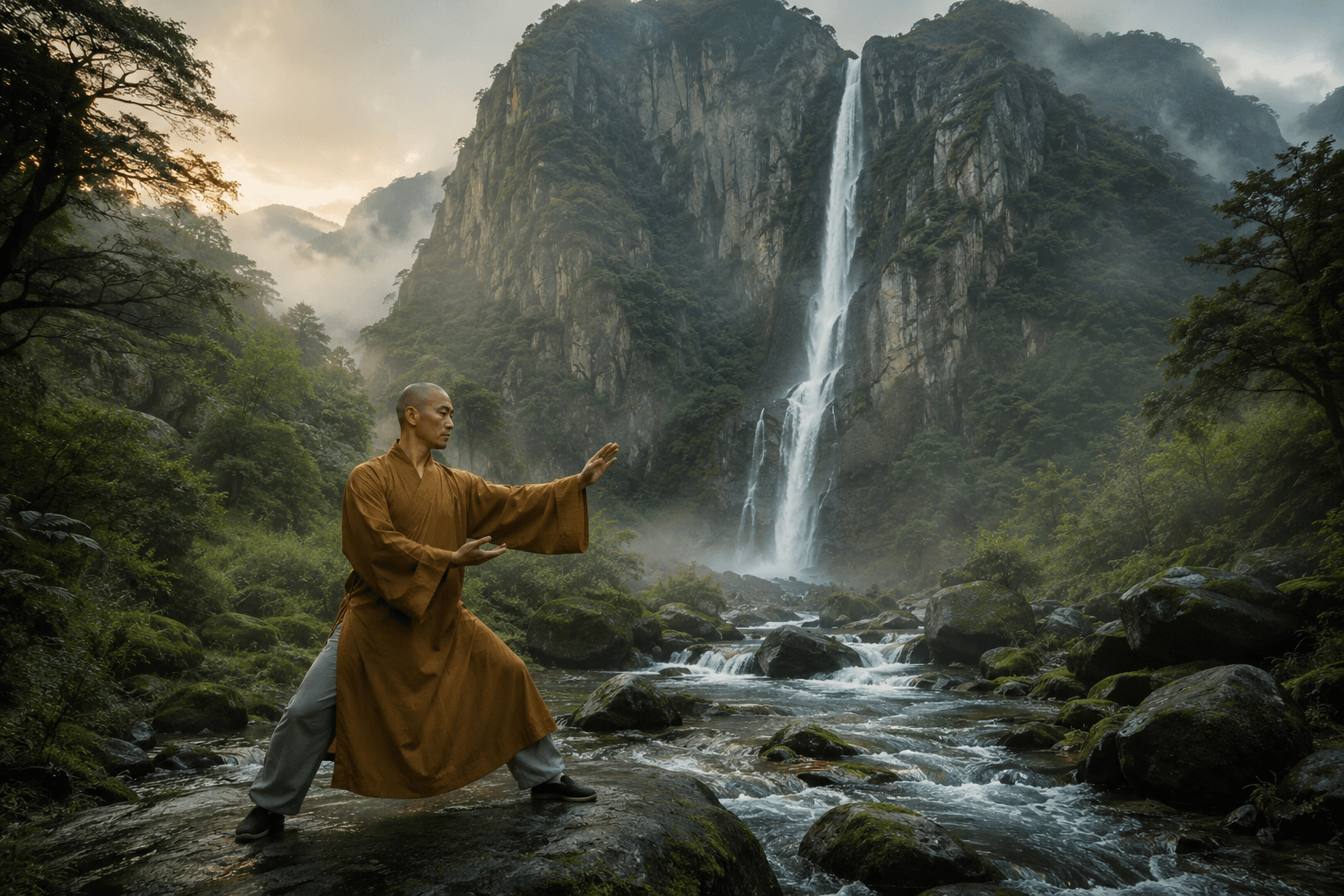
What would happen if we didn’t have to react immediately to every difficulty, resolve every uncertainty, or control every outcome? Amid the fast pace of life, pausing and letting go can seem like a mistake, yet sometimes they allow us to recognize the right action. This is the heart of Wu Wei—not inaction, but action that neither tries to force an outcome nor arises from struggle or the need for control.
What Is Wu Wei?
The Chinese term Wu Wei is written 無為. The word Wu means “without” or “absence,” while Wei refers to doing, acting, and deliberate intervention. The term is therefore commonly translated as “non-doing,” “non-action,” or “effortless action.”
Yet Wu Wei does not suggest that we sit idle, ignore problems, or give up responsibility for our lives. It means acting without forced effort or unnecessary intervention. It is action attuned to the nature of the situation, the right timing, and the movement already underway.
Sometimes the right action is to move forward; sometimes it is to pause. At times we need to speak, set a boundary, and make a clear decision, while at others, silence and patience allow things to become clearer. Wisdom lies neither in constant activity nor in complete inaction, but in the ability to sense what the moment calls for.
Its Roots in the Dao De Jing
The primary source for understanding Wu Wei is the Dao De Jing, an ancient Chinese text traditionally attributed to the sage Laozi. The principle appears in connection with the idea that the Dao does not act through forced intention, yet nothing is left undone.
The path toward the Dao is described as a process of reducing and letting go: less control, less intervention, and less unnecessary effort.
What Is the Dao?
The word Dao—道 literally means “the Way.” In Daoism, it refers not simply to a path a person chooses to follow, but to the deep, natural principle through which life arises, changes, and returns to its source.
The Dao is not a god or an entity that decides what will happen. Nor is it a rigid system of rules. We can think of it as the way nature unfolds: seasons change, water flows, plants grow, the body changes, and life moves through creation, development, decline, and renewal.
The Dao De Jing opens with the statement that the Dao that can be described in words is not the eternal Dao. Any definition we give it will be partial, because reality itself is greater than the concepts we use to try to contain it.
We can observe the Dao, sense its movement, and learn to live in harmony with it, but we cannot turn it into a fixed concept. It reveals itself through change, movement, and the relationships between things.
If the Dao is the natural way life unfolds, Wu Wei is the way of acting in harmony with it.
Being Like Water
Water is one of the central images in the Dao De Jing. It is soft and yielding, yet capable of reshaping even rock. It does not insist on a single form, but takes the shape of its container without losing its essence.
When water meets an obstacle, it does not stop to fight it. It moves around it, over it, or beneath it. Sometimes it waits, gathers, and eventually finds a way through.
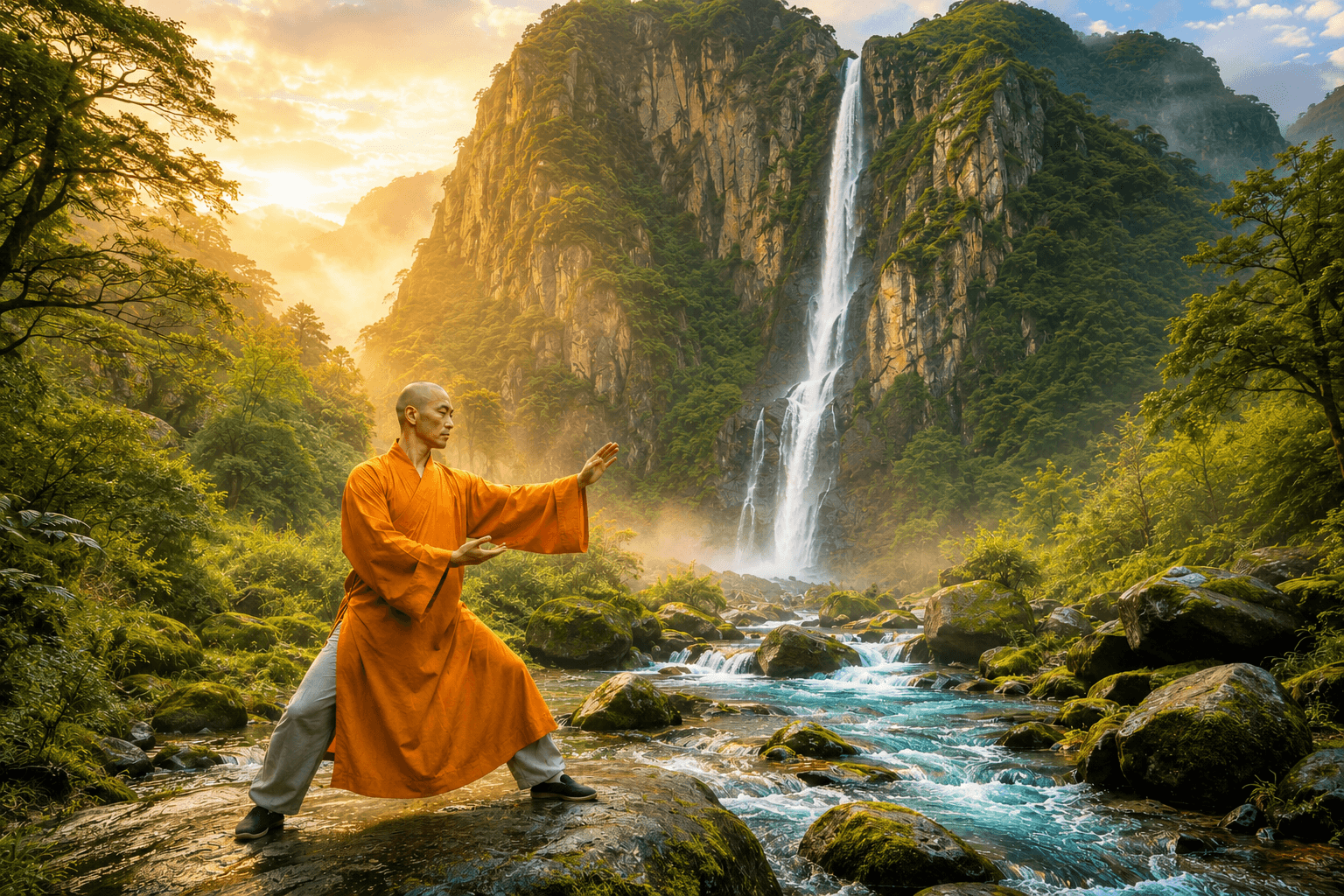
Water’s softness is not weakness. Its strength comes from its ability to adapt, persist, and keep moving. In the same way, Wu Wei invites us to be flexible enough not to break with every change.
We can remain true to ourselves while changing the way we act. We can maintain a sense of direction without insisting on a single form it must take.
Nonresistance According to Eckhart Tolle
Eckhart Tolle connects the wisdom of the Dao with the idea of nonresistance to the present moment. In his view, much of our psychological suffering comes not only from the event itself, but from our inner struggle with the fact that it is already happening.
Resistance appears in thoughts such as “This wasn’t supposed to happen,” “I can’t be in this situation,” or “Reality has to change right now before I can feel at peace.” These thoughts add another layer of tension, anger, and fear to the situation as it is.
Nonresistance means acknowledging that, in the present moment, reality is already here. It does not require us to like the situation, justify it, or refrain from changing it. We can accept what is happening while also setting a boundary, stepping away, or taking action to bring about change.
Acceptance says, “This is what is happening right now.” It does not mean that we have no right or ability to do anything about it. When the inner struggle subsides, action can arise from presence, discernment, and responsibility, rather than solely from fear, anger, or the need for control.
In this sense, there is a deep similarity between nonresistance and Wu Wei. In both, acceptance does not cancel out action; it creates the space from which more appropriate action can emerge.
Natural Action Still Takes Practice
In modern spiritual interpretations, Wu Wei is sometimes described as natural flow, freedom from the ego, or a willingness to let life lead us. These descriptions can be helpful, but it is important not to turn the principle into an expectation that everything will happen on its own, without our participation.
Natural action often grows out of deep preparation. Musicians practice for years before their playing begins to flow. Therapists study and listen until they can recognize when to speak and when to remain silent. Martial artists repeat the same movement over and over until the body no longer needs detailed instructions.
The goal is not to avoid all effort, but to reduce unfocused and unnecessary effort. Practice remains, but it gradually becomes more precise, quiet, and attuned to the situation.
Tai Chi as an Expression of Wu Wei
In tai chi, practitioners learn not to clash with an incoming force, but to sense its direction, join its movement, and redirect it through softness, stability, and timing. In this way, the body practices Wu Wei in a tangible form: it neither freezes before an obstacle nor applies more force than necessary, but responds to what the moment brings. Tai chi is not the same as Daoism, but it expresses many of its principles through movement, including the balance between yin and yang, flexibility, centeredness, and action without unnecessary resistance.
The Way Without Struggle
Wu Wei invites us to develop a different relationship with reality: not to withdraw from life, but to reduce unnecessary struggle. When the need to force, cling, and control subsides, more attentive and clear action becomes possible—action that moves with life rather than fighting against it.