
How to Read Tarot Cards: A Complete Beginner’s Guide
The entire tarot reading process in one place: how to frame a question, choose a spread, read a card in its position, and weave the cards into a single story. Includes a complete three-card example, common beginner mistakes, and diagrams for every step.

Reading tarot is not about memorizing 78 definitions. It is a skill of making connections: between a well-framed question, an image drawn into a particular position, and the cards beside it. Once you understand how those three come together, you can read a spread on your very first try—even with a guidebook open on the table.
This guide takes you through the whole process, from beginning to end: how to ask a question, choose a spread, read a card in its position, bring the cards together into one story, and recognize common mistakes before you make them. Each stage links to a more detailed guide, so you can read straight through or pause to explore whichever step interests you.
The Process at a Glance: From Your Question to Your Next Step
Every reading, from a single card to the Celtic Cross, follows the same path:
Question. What you want to understand, not what you want to happen.
Spread. A structure that fits the question: how many cards, and what role each position plays.
Card in position. Each card’s meaning, read through the role of the position it occupies.
Connections. What repeats, what is missing, what points in the same direction, and what conflicts.
Story and next step. One sentence that sums up the spread, and one action you can take in response.
Beginners tend to jump straight to the third stage and open their guidebook. But much of a reading’s precision is established beforehand, in the question, and much of its depth develops afterward, in the connections between the cards. Giving both ends of the process your attention makes a reading personal, even before you know all the cards.
Before You Begin: What Is in the Deck?
A complete tarot deck contains 78 cards, divided into two groups. You do not need to memorize them all before you start, but it helps to understand how the deck is organized. Its structure already tells you a great deal about any card you draw.
The Major Arcana. Twenty-two cards, from The Fool to The World. Each represents a stage in a larger journey: a beginning, a choice, a crisis, recovery, completion. When one of these cards appears, the question touches on something deeper than the events of the week. Learn more in the Introduction to the Major Arcana.
The Minor Arcana. Fifty-six cards in four suits: Wands, Cups, Swords, and Pentacles. Each suit contains ten numbered cards, from Ace through Ten, and four court cards: Page, Knight, Queen, and King. These are the cards of life as it happens: a conversation, an argument, a job offer, a good evening with friends. See the Introduction to the Minor Arcana.
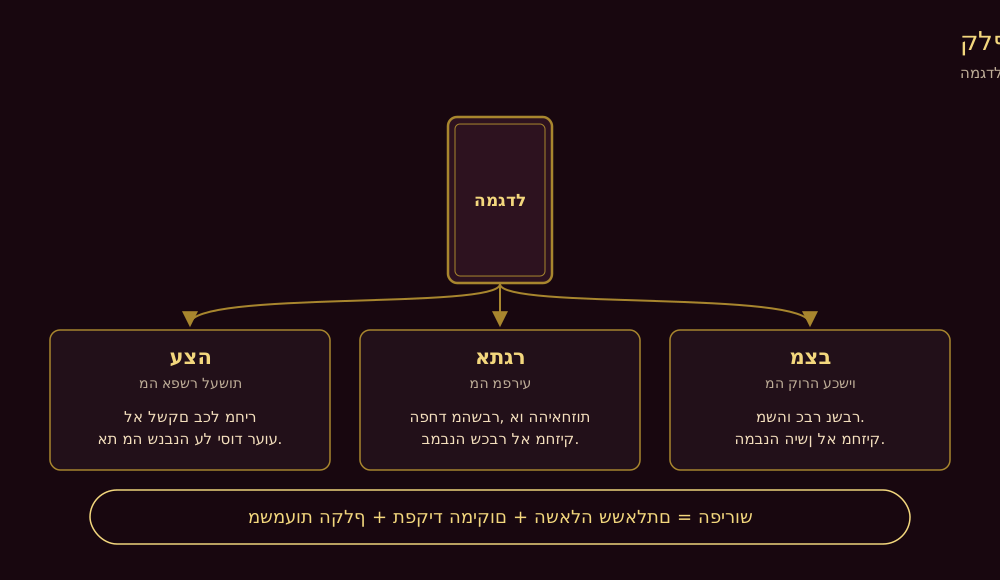
The Minor Arcana offers three clues you can read before opening a book: the suit tells you which area of life is involved, the number tells you the stage of the process, and the court figure tells you the role being played. The diagram brings all three together in one place.
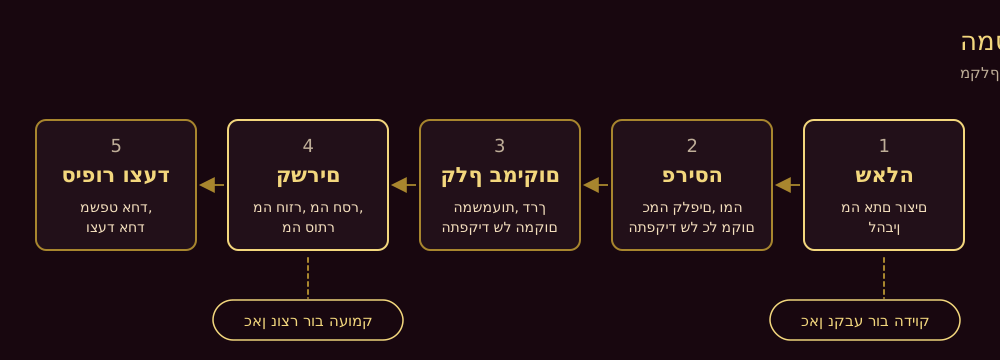
For the full picture, including the history of the deck and the origins of its symbols, see the Introduction to Tarot Cards.
Step 1: Frame Your Question
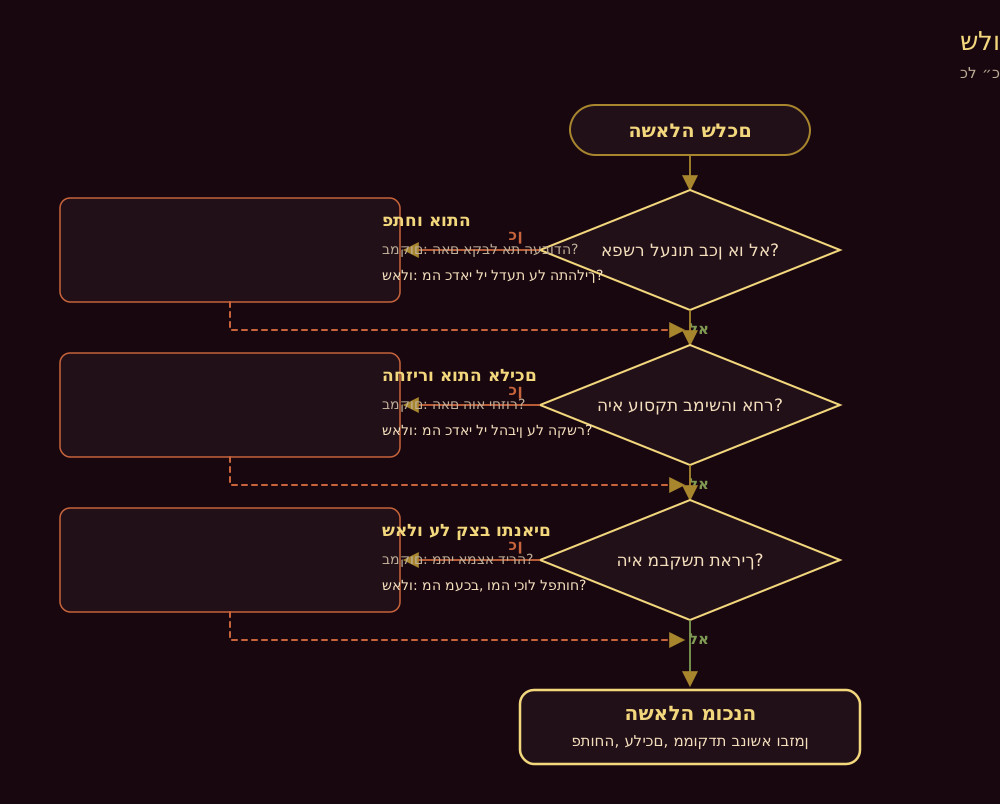
The cards answer the question you ask, not the one you meant to ask. A vague question leads to a vague reading, while a question that asks for a prophecy produces an answer that is hard to act on. Before shuffling, put your question through three quick checks:
Can it be answered with yes or no? If so, open it up. Instead of “Will I get the job?” ask, “What should I know about the hiring process for this job?” An open-ended question gives the cards room to show what supports you, what gets in the way, and what you have not yet seen.
Is it about someone else? Bring the focus back to yourself. Instead of “Will they come back?” ask, “What should I understand about this relationship right now?” The cards can describe a dynamic, but they cannot guarantee what another person will choose.
Does it ask for a date? Ask about pace and conditions instead. Rather than “When will I find an apartment?” ask, “What is holding up my apartment search, and what could help it move forward?”
A question that passes all three checks is open-ended, centered on you, and focused. If it also specifies a topic and a time frame, such as “over the next few months,” it is ready. For more useful question patterns and before-and-after examples, see How to Ask a Tarot Question.
Step 2: Choose a Spread That Fits the Question
A spread is not a ritual. It is a structure that gives each card a role. The rule of thumb: use as few cards as possible while still allowing room for the question. An extra card without a clear role adds noise, not precision.
One card. A message or a focus: what deserves your attention today. It does not show cause and effect, which makes it excellent for getting started and practicing. See the Single-Card Spread.
Three cards. The minimum needed to tell a story. In the Three-Card Reading, the positions are the Center, the Potential, and the Lesson. In the Situation · Challenge · Advice spread, they describe what is happening, what is getting in the way, and what you can do. This is the best spread to start with.
Five cards. For a more complex question. The Five-Card Question Spread also makes room for the root of the situation, what supports it, and what holds it back.
Two options. When you are deciding between two paths, Option A · Option B gives each path its own card. In the Decision Reading, each option receives three cards: what supports it, what it costs, and where it may lead.
The Celtic Cross. Ten cards that offer a broad view of a process. It is best to try it once reading three cards feels natural, and to read the Guide to the Celtic Cross first.
You can find all the spreads, along with guidance on when to use each one, on the Spreads page. For the practical details of shuffling, cutting, and drawing cards, see How to Lay Out Tarot Cards.
Step 3: Read Each Card in Its Position
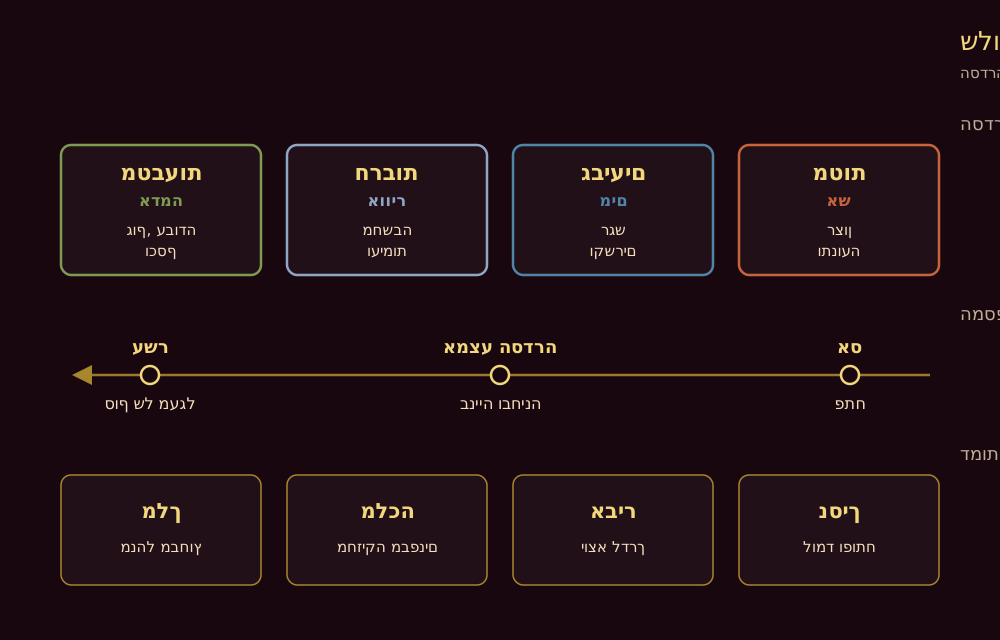
This is where most beginners open a book. That is perfectly fine, but it helps to do three things first:
Look at the image. What is happening in it? Who is there, where are they looking, what are they holding, what does the sky look like, and which colors dominate? The illustrations in the Rider–Waite–Smith deck were designed to be read. The detail that catches your eye first is often what the card wants to convey in the context of this question.
Identify its family. A Major Arcana card speaks to a larger process, a lesson, or a turning point. A Minor Arcana card speaks to what is happening in everyday life. The suit tells you the area involved: Wands are fire, will, and movement; Cups are water, emotion, and relationships; Swords are air, thought, and conflict; Pentacles are earth, the body, work, and money. The number tells you where you are in the process: the Ace is an opening, the middle of the suit involves building and testing, and the Ten marks the end of a cycle.
Identify the figure, if it is a court card. Court cards tend to be the most difficult for beginners because they can describe another person, an aspect of your personality, or a way of acting. First, ask what the figure does: the Page learns and opens things up, the Knight sets out, the Queen sustains from within, and the King manages from without. The suit then tells you which area of life is involved.
Ask what the position calls for. The same card says different things in different positions. The Tower in the “Situation” position says that something has already broken down. In the “Challenge” position, it may represent fear of that breakdown, or clinging to a structure that can no longer hold. In the “Advice” position, it suggests not trying to rebuild at any cost what was built on shaky foundations.
Only then should you look up the meaning. Each of the Card Pages includes the card’s central meanings, along with its light and shadow aspects. These layers and how to work with them are explored in a separate article: How to Read a Tarot Card in Depth.
A simple formula to remember: the meaning of the card, through the role of its position, within the question you asked. Together, these three create the interpretation. On its own, each is only raw material.
Step 4: Bring the Cards Together into One Story
A spread is more than the sum of its cards. After reading each card, look at the spread as a whole and ask a few questions:
How many Major Arcana cards are there? If most of the spread consists of Major Arcana cards, the situation reaches beyond the everyday. It is a process, not a problem you can solve in a single conversation. If there are none, the matter is in your hands, at the level of small decisions.
Which suit dominates? Three cards from the suit of Cups in a work reading suggest that the matter is more emotional than it seems. A suit that is entirely absent also offers information: a relationship spread without a single Cup asks where the feelings are.
What repeats? A repeated number, such as three Fives, a recurring color, or figures looking in the same direction. Repetition signals emphasis.
Where are the figures looking? A figure looking toward the next card creates a connection between the two. A figure turning away from it points to something that is not receiving attention.
What conflicts? Cards pulling in different directions are not a mistake. Usually, they express the very tension that gave rise to the question.
Finally, try to sum up the spread in one sentence and ask what small step you can take in response. If you cannot find that sentence, return to the question: it may be too broad. For a full guide to the relationships between cards, elements, and patterns, see How to Read a Full Spread.
An Example: Three Cards, One Reading
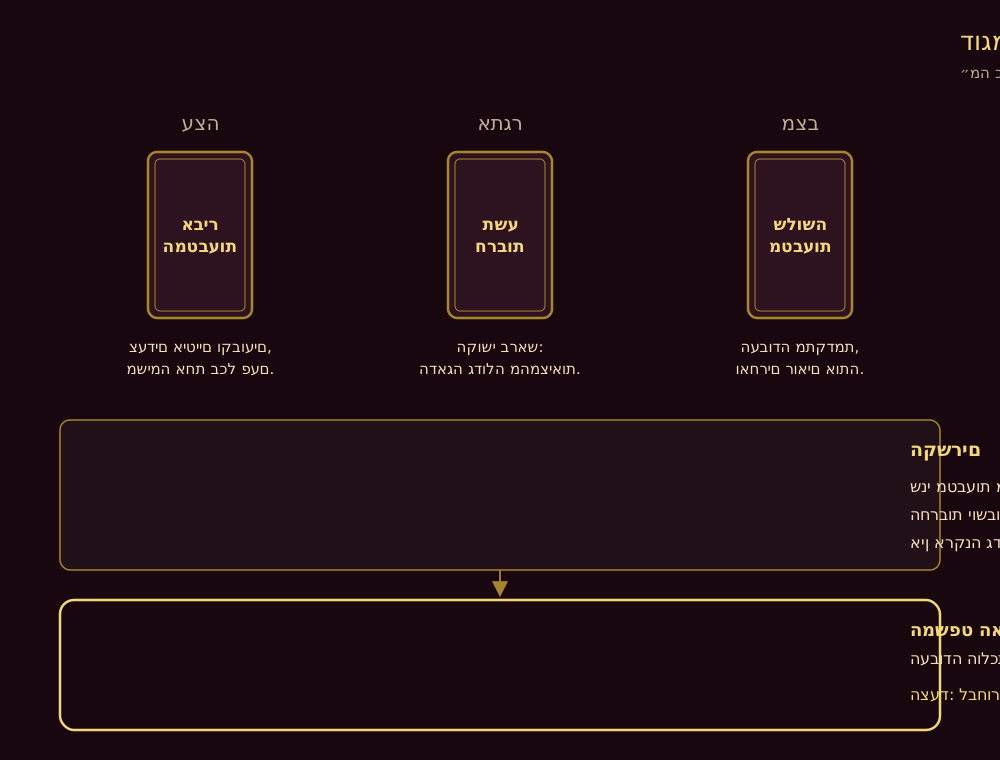
The question: “What should I understand about the transition into my new role during the first few months?” The spread: Situation · Challenge · Advice.
Situation: Three of Pentacles. Collaboration and developing skills. In the Situation position, the card says that the work itself is progressing and that others recognize what you bring to it.
Challenge: Nine of Swords. Nights spent worrying. In the Challenge position, the difficulty lies not in the work but in your thoughts: the fear of making a mistake is greater than the circumstances warrant.
Advice: Knight of Pentacles. Slow, steady steps. One task at a time, without trying to prove everything in the first week.
Now for the connections. Two of the three cards are Pentacles, so the matter is practical and tangible. The only Swords card sits precisely in the Challenge position, in the realm of thought. And there are no Major Arcana cards, so this is not a fateful turning point but an adjustment period that is in your hands.
The one-sentence summary: the work is going better than your worry suggests, and the way to quiet your mind is through a steady pace, not an enormous effort. The next step: choose one task for the coming week and see it through to completion.
Common Beginner Mistakes
Opening the book before looking at the card. A dictionary-style meaning without the image or the position sounds right for any question, which means it says very little about yours.
Reading a list instead of a story. Three separate interpretations do not yet make a reading. The reading begins when the cards start speaking to one another.
Ignoring the position. The same card in the Past position and the Advice position offers two different messages. Reading a card without its position means losing half the information.
Being frightened by difficult cards. Death almost never refers to death. It speaks of an ending that makes room for something else. The Ten of Swords marks the lowest point—and therefore the place from which things begin to improve. A difficult card shows you what deserves a closer look; it is not a sentence handed down.
Asking again until you like the answer. A second reading on the same question only creates confusion. If something is unclear, ask a different follow-up question. We explore this further in Why Not Ask Twice?.
Laying out too many cards for a small question. Ten cards for “What should I wear to the interview?” will produce ten directions. Match the size of the spread to the scope of the question.
Asking for an exact date. Tarot can speak to pace, windows of time, and necessary conditions—not a specific day on the calendar. Time and Timing in Tarot explains how to read timing in a spread without inventing dates.
Bending the cards to say what you want to hear. If you catch yourself explaining away every card so it fits the answer you wanted from the start, pause. Ask yourself what you would tell a friend who received this exact spread.
How to Practice
The best way to learn the cards is to meet them one at a time, over time, within life itself.
A card a day. Draw a card in the morning and ask, “What is important for me to notice today?” In the evening, reflect on where you encountered it. You can begin with the Daily Card.
A reading journal. Write down the question, the cards, and your one-sentence summary. Read it again after a month. This is how you learn what the cards said to you, not just what a book says about them.
Start small. Spend a week with one card, then two weeks with three. Move on to the Celtic Cross when the connections between three cards begin to come naturally.
If you would like to see how a complete reading comes together, you can Ask a Question on AGAT. The interpretation connects the question, the cards, their positions, and their relationships in the same way described here.
Frequently Asked Questions
How Do You Interpret Tarot Cards?
In four steps: frame an open-ended question centered on you, choose a spread in which every position has a role, read each card through the role of its position, and finally bring the cards together into one story and ask what comes next. A card’s meaning on its own is only a starting point. The interpretation emerges from its meeting with the position and the question.
What Cards Are in a Tarot Deck?
There are 78 cards: 22 Major Arcana cards, from The Fool to The World, and 56 Minor Arcana cards in four suits—Wands, Cups, Swords, and Pentacles. Each suit has ten numbered cards and four court cards. You can find all the cards and their meanings on the Card Pages.
Which Deck Should I Buy as a Beginner?
Choose a deck with fully illustrated scenes on all 78 cards, especially the Rider–Waite–Smith deck or a deck based on it. Almost all books and guides, including this guide and the card pages on this site, describe its illustrations, making it easy to learn from. If you do not have a deck yet, you can begin with a reading on the site.
Do I Need to Memorize the Meanings of All 78 Cards?
No. It is enough to become familiar with the four suits, the progression of numbers from Ace through Ten, and the broad outlines of the 22 Major Arcana cards. From there, you can make sense of a card even if you have never encountered it before, and learn the rest as you read.
How Many Cards Should I Lay Out for My First Reading?
One or three. One card teaches you the language of images; three cards teach you to connect them. Larger spreads come later.
What Should I Do with a Reversed Card?
Some readers give reversed cards their own meanings, while others read every card as upright. At first, it is simpler to read them all upright and understand the difficulty through the position and the surrounding cards. We discuss both approaches in How to Lay Out Tarot Cards.
What If a Card Does Not Seem to Connect to the Question?
Return to the image and the position, and look at how it connects to the cards beside it. If you still cannot find a connection, note it in your journal. A card that seems out of place today often becomes clear a few days later. You can also draw one clarifying card instead of laying out the entire spread again.
Should I Read Intuitively or Follow the Book?
Both, in that order. First, look at the image and notice your initial impression; only then check the established meaning. Your impression gives the reading a personal direction, while the meaning keeps it from becoming guesswork. We explore the intuitive side of reading in Intuitive Tarot Reading.
How Long Does It Take to Learn, and Can I Learn on My Own?
You can learn the basics in a few weeks by drawing one card a day, and a three-card reading begins to feel natural after a month or two of practice. It is entirely possible to learn on your own with a deck, a reading journal, and the guides on this site. A teacher or group helps mainly by letting you hear how others read the same cards.
Can I Read Tarot for Myself?
Yes, and most learners start that way. The main challenge is reading without wanting a particular answer. An open-ended question and a reading journal help you maintain an honest perspective.
Does Tarot Predict the Future?
Tarot shows the situation as it stands now and the direction it is tending toward if nothing changes. It does not determine your fate. That is why the most useful reading ends with a step you can take, not a prediction.